D-Day - 80 Years Later

Today is the 80th anniversary of the Allied invasion of Normandy, France on June 6, 1944, opening a western front to liberate Nazi-occupied Europe. I typically release my History Lowdown on Saturday morning, but the teacher instinct that is still alive and well within me knows that anniversaries are the easiest past and present connection to make for historic relevance. I first became aware of the events that day during early trips to the library as a kid in the late 1970s. I recall the excitement of discovering a 1962 movie titled The Longest Day when movie rental businesses opened in the 1980s. I later saw Saving Private Ryan at the theater in 1998. The first 27 minutes left me stunned in silence. Our school received permission from the film company to use that clip in class, and I showed it in class—with the necessary permission slips—for nearly 25 years. I knew every line. The last few years of the film’s use, I couldn't watch the scenes where the German MG42 machine gun operators mowed down American soldiers like a lawnmower cutting grass. If you have never seen it, it's worth viewing to appreciate what the Americans, British, Canadian, French and Polish troops endured that day, the bravery displayed and, in a greater measure, how awful war is.
There will certainly be numerous news stories today with the basic facts of the day and why the day was so important; thus, there is no need to cover those here. Instead, this column will feature lesser-known stories that I believe are worthy of being told—stories not usually known by the casual student of history. Stories that made teaching history special compared to other subjects. These five stories are among my favorites for a number of reasons.
Theodore Roosevelt, Jr.
Theodore Roosevelt: 26th President, conservationist, war hero, naturalist, police commissioner, cattle rancher, author and dad. Roosevelt had six children, including four sons. Quentin Roosevelt was killed July 14, 1918, while serving as a combat pilot in WWI when his plane was shot down in a dogfight with a German plane. Theodore Roosevelt, Jr., was the oldest son of Roosevelt and his wife Edith. Like father, like son is a fitting description of them, though inadequate at the same time. Both men were recipients of the nation’s highest military honor for bravery: The Congressional Medal of Honor.
Theodore Roosevelt (senior) was awarded the Medal of Honor for action during the Spanish American War at San Juan Heights. He led a series of charges up Kettle Hill towards San Juan Heights on his horse while the Rough Riders followed on foot. He rode up and down the hill encouraging his men to keep moving despite being in constant danger and under fire. He killed one Spaniard with a revolver salvaged from the U.S.S. Maine, fitting to his larger than life persona. He was the first Rough Rider to reach and break through the barbed wire entrenchment at the top.
Theodore Roosevelt, Jr., had some big shoes to fill if he aspired to be like his dad. All four Roosevelt brothers served in World War I. Roosevelt Jr. served in France as a battalion commander where he was wounded and gassed. He was cited for being the best battalion commander in France and received the Distinguished Service Cross. However, it was World War II where he would distinguish himself like his father, or as the Medal of Honor authorization states, “This Medal is authorized for any military service member who distinguishes himself conspicuously by gallantry and intrepidity at the risk of his life above and beyond the call of duty.”
After serving with the 26th Division in the fight for North Africa, General Roosevelt was assigned to England to prepare for the D-Day invasion. He was made deputy commander of the 4th Infantry Division that would assault Utah Beach on D-Day. He asked his superior General Raymond Barton to accompany the troops—he was denied. He asked again. Denied again. Roosevelt, like his father, would not give up easily. He filed a written request stating, “The force and skill with which the first elements hit the beach and proceed may determine the ultimate success of the operation . . . . With troops engaged for the first time, the behavior pattern of all is apt to be set by those first engagements. [It is] considered that accurate information of the existing situation should be available for each succeeding element as it lands. You should have when you get to shore an overall picture in which you can place confidence. I believe I can contribute materially on all of the above by going in with the assault companies. Furthermore I personally know both officers and men of these advance units and believe that it will steady them to know that I am with them.” Barton acquiesced and granted Roosevelt permission.
Theodore Roosevelt, Jr., was the only general to go ashore with the first wave at Normandy. He was also the oldest to go ashore that day at the age of 56. Additionally, he was half of the only father-and-son duo that landed that day; his son Quentin Roosevelt II was in the first wave at Omaha Beach. Being in the first wave ashore at 56 is remarkable, but that alone is not worthy of the Medal of Honor. His next action was.
Roosevelt was among the first ashore and was the first man to exit his landing craft. He quickly realized they had landed in the wrong spot. Roosevelt carried out a reconnaissance of the beach and found causeways to open up a front, telling his battalion commanders the information and announcing, “We’ll start the war here!” He led the attack and organized the landing craft that continued to come ashore. Most remarkably, he did this under fire from German gun positions while holding his revolver in one hand and a cane in the other. That’s right, his arthritis from his WWI injuries necessitated the use of a cane to get around. Bravery—like father, like son.
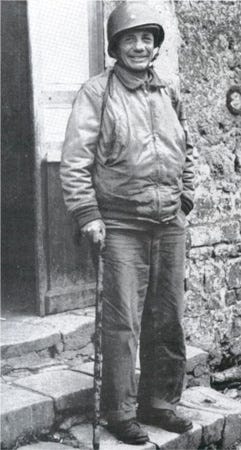
Theodore Roosevelt, Jr., was posthumously awarded the Medal of Honor for what he did that day on September 21, 1944, which was 107 days after his landing on Normandy Beach. Unfortunately, the recognition was posthumous as Roosevelt had died of a heart attack on July 12, just 39 days after the landings. Like his father, he died in his sleep—likely the only way either would have lost a fight with death.
The First Casualties
It's really hard to determine what the first losses were in a military operation of this size—an operation with more than 5,000 ships, nearly 10,000 aircraft and more than 300,000 military personnel. A great deal of attention is given to the assault wave troops that landed on the five beachheads to be established that day, and rightfully so. However, the early morning landings behind enemy lines made by the Allied airborne divisions are sometimes overlooked; these are the American 82nd, American 101st and the British 6th Division. The book Band of Brothers, and later the miniseries, renewed interest in their efforts that day.
These men had trained and then trained some more for this operation with the goal of securing bridges and crossroads to prevent reinforcement of the beaches. It was a very difficult task. They would be parachuting into unknown and enemy-controlled territory. The Germans anticipated this and flooded entire fields to prevent their success. The landings would take place at night, starting at 1:30 AM, and to set the table, here is a BBC description of paratroopers preparing to take off for France: “Their faces were darkened with cocoa; sheathed knives were strapped to their ankles; tommy guns strapped to their waists; bandoliers and hand grenades, coils of rope, pick handles, spades, rubber dinghies hung around them, and a few personal oddments, like the lad who was taking a newspaper to read on the plane ... There was an easy familiar touch about the way they were getting ready, as though they had done it often before. Well, yes, they had kitted up and climbed aboard often just like this—twenty, thirty, forty times some of them, but it had never been quite like this before. This was the first combat jump for every one of them.” These men would be the first casualties.
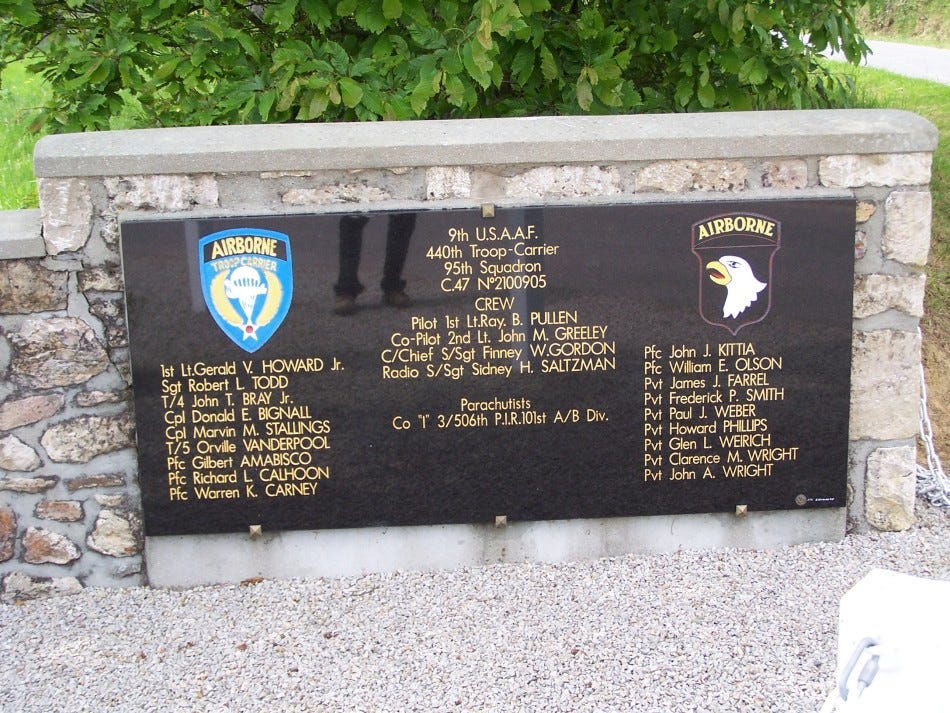
Among the first casualties that day was James Farrell. Farrell was born in my hometown of Altoona, Pennsylvania, on July 14, 1918. Like many Altoona men, he worked for the Pennsylvania Railroad. He joined the U.S. Army on October 15,1942. He first trained for anti-tank duty at Camp Atterbury, Indiana, until he volunteered for the paratroopers and completed training at Fort Benning, Georgia. He was assigned to Company I, 3rd Battalion, 506th Parachute Infantry Regiment, 101st Airborne Division, and deployed to England in February of 1944 to prepare for the Allied invasion of France.
Private Farrell’s transport plane was shot down in the early hours of the invasion of German-occupied France on D-Day. He was on a C-47A Skytrain from the 95th Troop Carrier Squadron, being flown to Drop Zone D. The transport, code-named Chalk 15, was shot down by German anti-aircraft fire west of Magneville, resulting in the death of 18 paratroopers and four crew. He is among the first killed that day and certainly the first Blair County man killed on D-Day. Farrell’s family received word he was missing on July 1st, followed by a telegram on September 3rd that he was killed in action. His brother Patrick was also a paratrooper that was missing after D-Day, and the family was notified at the same time he was a POW of Germany. Private Farrell is memorialized along with the others killed on his plane in Magneville, France. He is buried in the Normandy American Cemetery and Memorial in Colleville-sur-Mer, France. The French do such a good job of honoring these men, certainly more than we do.
Code Talkers
You may very well be thinking, I know this story or I’ve heard of them. Bear with me, most folks don't know this one. Maybe you have seen the movie Windtalkers about the Navajo Code Talkers who served in the Pacific Theatre. As a historian, it has quite a few historical inaccuracies, so I struggle to balance that with the fact it creates awareness for a story worthy of telling. Recognized officially by President Ronald Reagan in 1982, the story of the Navajo Code Talkers who used their native language to send coded messages the Japanese could not decipher has become well known. They were not, however, the only Native American tribe to serve that role.
Few people know about the Comanche Code Talkers who landed in the first wave on D-Day. The Comanche Code Talkers are credited with providing secure communications that day, including ensuring that the follow-up waves of landing craft came ashore at the correct spots. General Theodore Roosevelt had a Comanche Code Talker named Larry Saupitty with him on the beach. Saupitty was wounded twice but survived. A total of 175 Native Americans came ashore on June 6, 1944, with the invasion force, including thirteen Comanche Code Talkers.
Little was known about these efforts because their actions in combat were classified and not made public until 1968. Many of the Native Americans, both Navajo and Comanche, signed non-disclosure agreements, thus guaranteeing that their bravery would remain a secret. There are no surviving Comanche Code Talkers today. The Comanche Museum and Cultural Center has an exhibit about them, and there is just one book published about their story.
Roads and Bridges
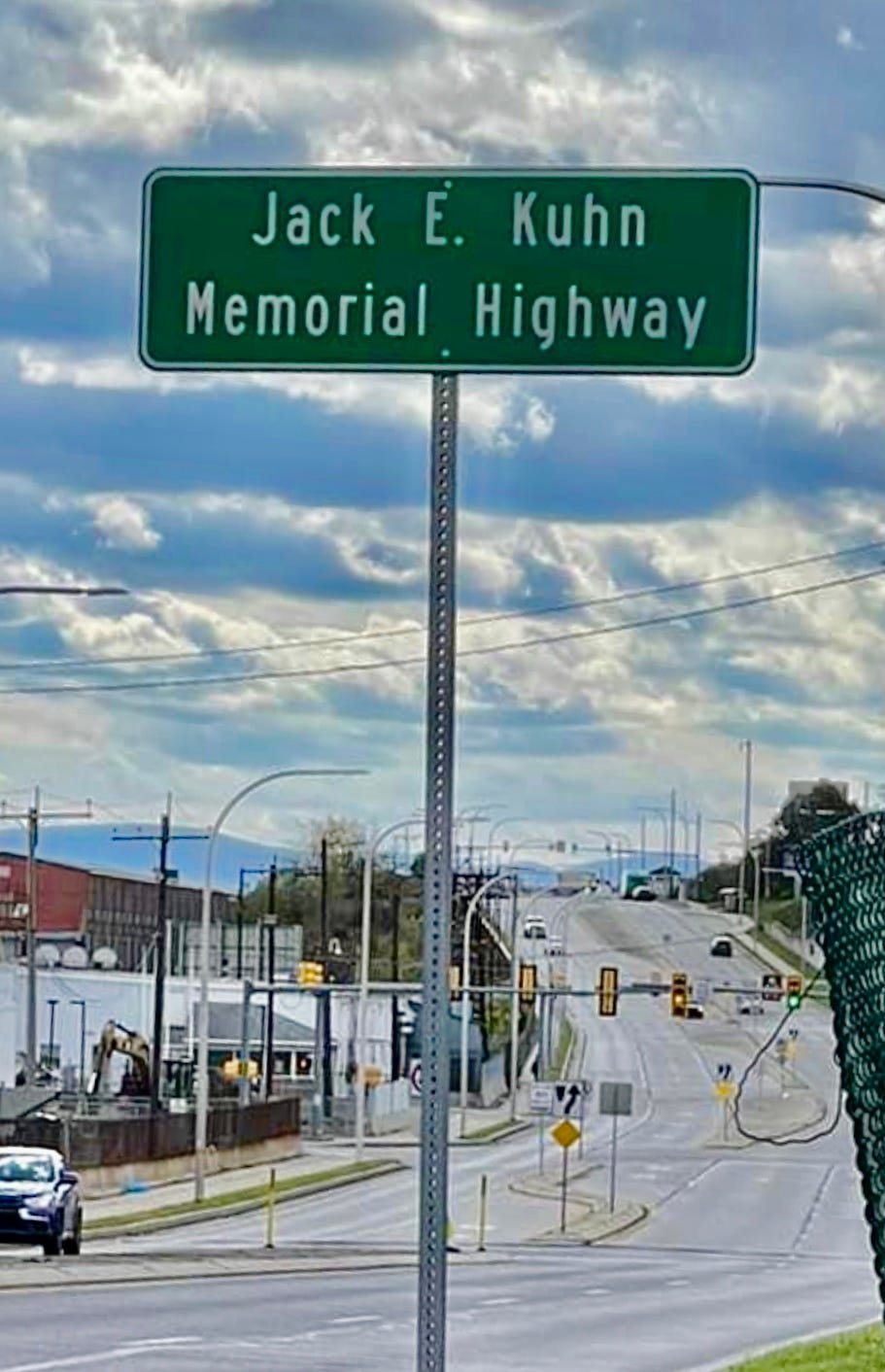
Many communities honor local veterans by naming bridges or roads for them. It’s a simple way to remember their heroism and sacrifice. That is, if folks take the time to find out something about the name on that road sign they drive by. In Altoona, as one drives to the Juniata section or back, there is a small sign that reads “Jack E. Kuhn Memorial Highway.” Mr. Kuhn, as I called him when he visited Altoona High School years ago, had a very memorable June 6, 1944.
The Army has used Rangers since The Revolutionary War, but the Rangers we know today as Special Forces got their start in World War II. Jack Kuhn joined the Rangers. Ranger duty was tough. As the soldiers got off the bus on the first day after volunteering for Ranger training, they were told to “get moving” on a 15-mile hike—in whatever they were wearing. That cut the numbers down pretty quickly.
On June 6, Kuhn’s unit, the 2nd Ranger Battalion, was given the task of destroying six, 155-mm guns on the top of Pointe du Hoc. Pointe du Hoc was strategically located between the American beaches of Omaha and Utah and protected by 100-foot vertical cliffs on the beach. The six guns needed to be neutralized since they could rain death on the Americans landing on both beaches—-each round fired was 110 pounds.
The Rangers’ mission was to land on the beach, climb the 100-foot cliffs, locate and destroy the German guns and then secure an important highway until reinforcements arrived. Half of the 2nd Ranger Battalion, including Kuhn, would scale the cliffs and destroy the guns. When done, they would send a message to the other half of the battalion, who were waiting offshore with the 5th Ranger Battalion, to come ashore and help them reinforce their defensive positions.
Things went wrong almost immediately as the strong tide and rough seas pushed the Rangers off course. By the time they landed, they had only five minutes before the signal was supposed to be sent that the mission was accomplished. As a result, the remainder of the 2nd, and the entirety of the 5th, moved on to instead land at Omaha Beach.
Once ashore, climbing the cliffs was hard enough, but they had to do so while also being shot at, having grenades dropped over the sides of the cliff and their ropes being cut by German defenders at the top. Eventually, they persevered and made it to the top. The search for the guns was then on.
The land was riddled with bomb craters from earlier attempts to use airplanes to destroy the guns without any success. The bombing did have one effect, however. When the Rangers finally found the gun emplacements, they were empty—except for decoy logs made to look like guns. The Germans had moved the guns to avoid the bombardments.
The Rangers were now outnumbered and isolated from reinforcements; they set out to control their second objective, an important roadway.
Scouting their left flank were two Rangers, Jack Kuhn and Leonard “Bud” Lomell. Lomell spotted deep ruts from something heavy being moved. They followed the tracks until they encountered a gathering of over 100 German soldiers. Fortunately, in the chaos of the morning, the two went unnoticed and then discovered in an orchard the six guns—they were in place and ready to be fired. Lomell and Kuhn used thermite grenades (they don’t explode, but rather burn at a high temperature that causes metal to melt) to destroy three guns. They then retrieved more and destroyed the other three guns. To make sure they were inoperable, the men also removed the optical sites and smashed them with their rifle butts. Mission accomplished…sort of.
The Rangers were still outnumbered, and they needed to hold their position until reinforcements arrived. That didn’t happen for two more days. It was ferocious combat from the time they landed until they were relieved. When Lomell and Kuhn found the guns, there were only 12 men from their company that were able to continue fighting. When they were relieved two days later, of the 225 men in the three Ranger companies that landed at Pointe du Hoc, only 90 had not been killed or wounded.
Kuhn received a Silver Star and two Bronze Stars for his bravery and was later admitted to the Ranger Hall of Fame. Eventually, he became police chief for the city of Altoona, and after retiring he worked as a van driver for the Altoona School District. When you see a name on one of those dedication signs, be sure to check it out—each person earned that honor.
The Tin Cans
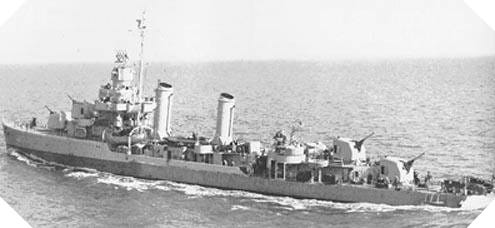
If you know me, the son of a navy man, you might have guessed I would have a story about the U.S. Navy on D-Day. Tin can is the nickname given by sailors to ships in our navy classified as destroyers. Unlike the larger ships in the war—battleships, cruisers and aircraft carriers—destroyers were smaller and built with thin hulls…like a tin can. This was great for speed and maneuverability, not so much for protection.
On the morning of June 6th, battleships and cruisers were to “soften up” the German shore defenses before the landing craft went in supported by the destroyers. The destroyers were instructed to move within 3,500 yards of the beach to give support to the infantry going ashore. Their 5-inch guns would eliminate German positions that had survived both the pre-invasion aerial bombardment and the pounding by the big ships. Despite the extensive bombing and naval artillery barrage, there was no shortage of targets as the German defense proved obstinate. German defenses were certainly not neutralized as the Allied command had hoped.
Destroyers were named after people—unlike the bigger ships, like battleships that were named for states, and cruisers that were named for cities. One might think the German guns focused on the men coming ashore as the ultimate threat to their existence. That is true for the German infantry, but German artillery positions opened fire at the destroyers that were sailing back and forth along the beach. The destroyers along Utah Beach were in position but were not permitted to fire until ordered to do so, which sailors described as an agonizingly painful wait. The Allies were trying to maintain the ruse that they were not invading Normandy as long as possible.
At 5:35 AM on June 6th, the U.S.S. Fitch cut loose with her first broadside as her 5- inch guns roared into action. It was the first shot fired in the amphibious landing at Normandy. It must have provided some reassurance to the infantry who were crowded on landing ships, bouncing in the rough waters as they headed for Hitler’s Atlantic Wall. The Fitch and the U.S.S. Corry zigzagged, narrowly avoiding German artillery shells for an hour. The ships were to move under the cover of a smoke screen, but the plane that was to deploy the smoke screen was shot down—yet they pressed on. The Corry struck a German mine after it was hit several times by German fire; nearly split in two and taking on water, the order to abandon ship was given. The water was 52 degrees that day. The survivors were eventually rescued, some after two hours, which is longer than the human body should survive after being exposed to water that cold. Of note, some were rescued by the PT boat of Lt. Cmdr. John Bulkeley, who two years earlier had rescued General Douglas MacArthur from the Philippines.
The U.S.S. Hobson joined the Fitch and continued to support the invasion, which was going relatively well on Utah Beach. Omaha Beach, the other American Beach landing zone, was a very different story. Tanks that were expected to make it ashore didn’t, and the American infantry was pinned down on the beach by fierce German fire, including the German MG42 machine gun nicknamed Hitler’s buzzsaw due to its rapid rate of fire. The sound alone was terrifying. What came next is one of those Hollywood movie moments. The U.S.S. Emmons was escorting minesweepers when word was received the landings were in trouble. In total disregard of the order not to close on the beaches at a range under 3,500 yards, the Emmons and U.S.S. Doyle headed in. The radio barked with a message from the invasion command ship: “Go get ‘em, Our boys need help.” Risking both running aground in the shallow water and a direct hit, which at that range would have been lethal, both ships closed to under 1,000 yards, destroying several German gun positions and a communications bunker.
After several hours of hard fighting, Colonel B. B. Talley on Omaha Beach sent a message to Major General Leonard T. Gerow, commander of V Corps on Omaha: “Troops moving up slope of Fox, Green, and Red Beaches. I join you in thanking God for our Navy.”
That may be my favorite story that day. As always, thanks for reading the History Lowdown.
Thanks for remembering those brave men. I was working at A.A.H.S. in June of 1994. Jack Kuhn was a van driver for the summer feeding program . I never met a more patriotic yet sincerely humble person than him.
Thank you for sharing the stories of these brave men. One of them you mentioned was Ron’s uncle. He told me that when the family would get together, his dad and his uncle would go off by themselves and reminisce about the war. These men and women truly exhibited a level of bravery and courage that many, including myself, find difficult to comprehend.