The Encore Effect
When History Won’t Leave the Stage

President Harry Truman famously said, “The only thing new in the world is the history you do not know.” While my friends with science backgrounds and degrees would likely disagree with this premise, Truman has a point when it comes to history. One of the unfortunate things that happens with history, particularly with popular history, is that once a story becomes prominent, it becomes the primary story shared or taught for given topics and themes. Everyone knows the story of Paul Revere. Pickett’s charge has become the focus of the Battle of Gettysburg. Herbert Hoover is to blame for the Great Depression. Susan B. Anthony secured the right to vote for women. The first two examples are important parts of those events, but the focus on their roles has resulted in the exclusion of other parts. The second two have resulted in historical inaccuracies from oversimplification that excludes other details.
The Encore Effect causes other worthy and important stories to be neglected or even untold since the focus falls solely on these “center-stage” stories. It reminds me of listening to ‘80s radio on SiriusXM satellite radio. It’s a favorite channel of mine. They focus so much on the recognizable, popular songs that people know all the lyrics to that they exclude other great songs from the ‘80s. I realize that for both music and history, time limitations make it impossible to play every song or learn every story in history.
I often witnessed this shortfall with American history survey classes, where it becomes routine to tell the same stories and focus on the same people yearly. Everyone is guilty of it at one point or another. Don’t get me wrong—it is important to tell those popular stories. They are so well-known that you don’t want to have a student who says, “I’ve never heard of Thomas Edison or Clara Barton.” That would lead to more of the overstated criticism of “What are they even teaching in schools today?” It makes me think of those video clips Jay Leno used to do titled “Jaywalking.” Viewers laughed as interviewees either couldn’t answer or gave wildly inaccurate responses to the most routine history questions. It is important to know these stories, but it’s equally important for those who want to better understand their country’s history and heritage to explore some of the lesser known but equally important stories as well. For example, everyone seems to know about the terrible events that happened at Auschwitz, but one can expand their understanding of the Holocaust by looking at the remarkable events that happened at Sobibor. The New Deal is the most widely recognized presidential program, but how about the Fair Deal and the Great Society? The courage of the original Mercury Seven astronauts is well-known, but most have never heard of the Mercury 13 astronauts who are all but forgotten.
Since it is Black History Month, the following story example is one that gets to the point of popular history. Rosa Parks is a name that is universally known. The recipient of the Presidential Medal of Freedom and Congressional Gold Medal has numerous items named for her, from streets to schools with statues as well as a variety of awards and recognitions in her honor. Her refusal to surrender her seat on a Montgomery public bus and subsequent arrest were a central moment in the modern civil rights era. All of those honors and recognitions are well-deserved, as is her place in history.
For every person that knows Rosa Parks, there may be an equal number that do not know Irene Morgan. Morgan was born April 9, 1917, in Baltimore, Maryland. During World War II, she took a job with the Glenn L. Martin aircraft company, a defense contractor for the United States during the war. She worked on the production line making the B-26 Marauder bomber. As a black woman, this job would’ve not been available to her prior to the war, but the demand for labor during World War II created new opportunities. Like so many Americans, she pitched in and did her part.
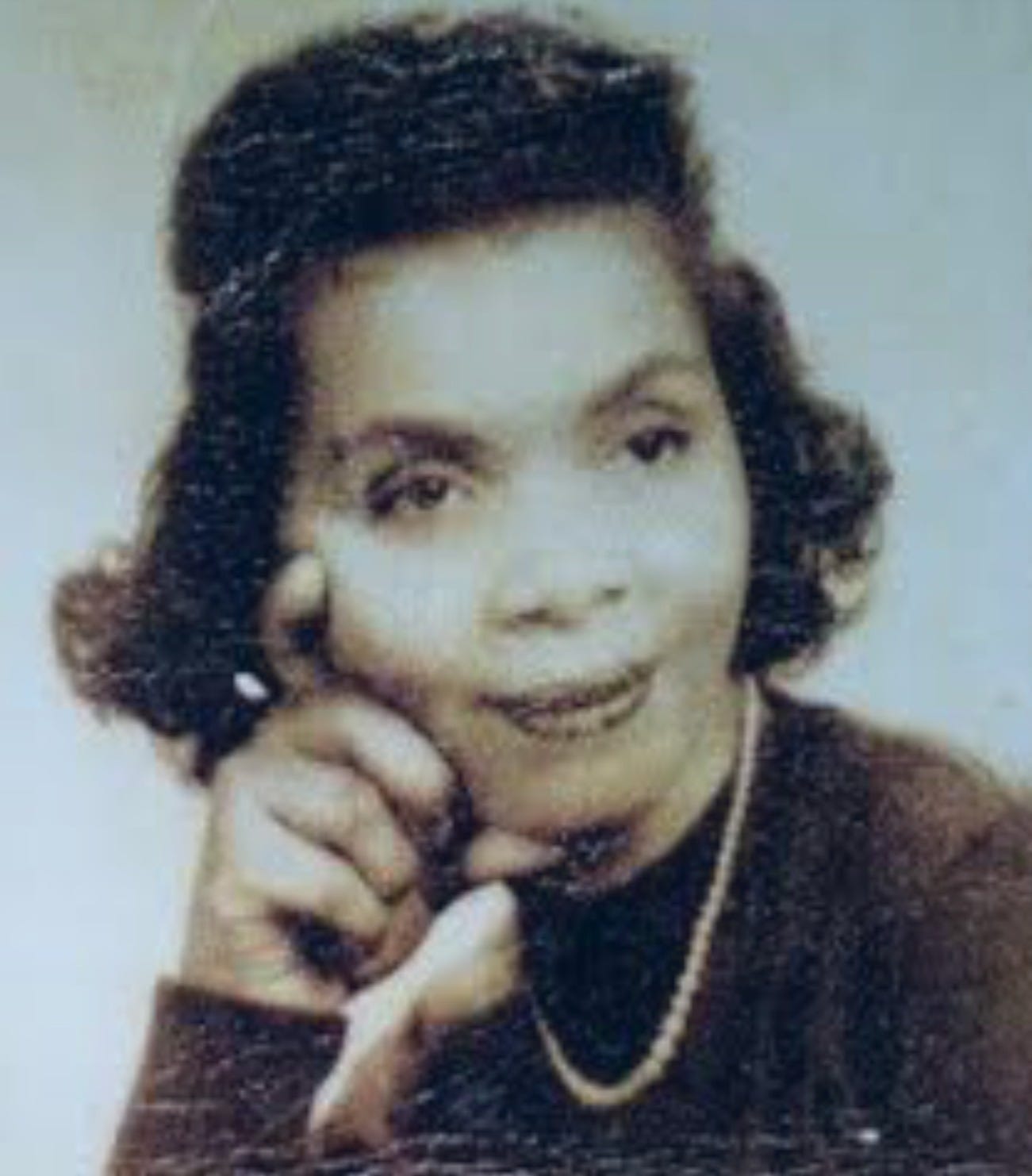
The stress of working an industrial job with long hours resulted in her having a miscarriage in1944. She traveled to visit her mother in Gloucester, Virginia. She was taking a break to physically and mentally recover and planned to return to her job making aircraft. On July 16, 1944, Morgan boarded a Greyhound bus to return to Baltimore and her job. She took a seat with another African American woman who was carrying an infant. It’s important to note the seat across from them was vacant because it was illegal for African Americans to sit next to or across from white passengers at this time. Eventually a white passenger boarded the bus and took the seat across from them. At that point, the bus driver stood up and walked back to their seat and informed both Walker and her seatmate they would have to move. Morgan refused to move, and the bus driver immediately drove the bus to a police station, parked the bus and left to find the sheriff.
It wasn’t long before the sheriff returned with a warrant in hand for her arrest. When presented with the arrest warrant, Morgan tore it up and threw it out the window. At this point, the sheriff grabbed her arm with the intention of pulling her off the bus. She responded by kicking him in the groin. He retreated and waddled off the bus to find another law enforcement officer. Another officer boarded the bus and confronted Morgan. She explained, “He touched me and that’s when I kicked him in a very bad place.” She further explained that she contemplated biting him but decided not to because he looked dirty. The second officer then attempted to pull her off the bus, and pushing and pulling ensued between the two of them. He threatened to use his nightstick on her to which she replied, “We’ll whip each other!” He retreated to find reinforcements and Morgan was finally arrested in Saluda, Virginia.
Morgan was charged with resisting arrest and violating Virginia’s Jim Crow transit law. On October 18, 1944, Morgan’s case was heard in court. She pleaded guilty and agreed to pay a $100 fine for resisting arrest but refused to plead to the segregation charge. She argued, since Maryland did not enforce segregation for interstate travel, Virginia’s Jim Crow law should not apply to her, a resident of Maryland. The local court found her guilty. With the help of the NAACP, she appealed the ruling. The case was heard by the Virginia Supreme Court. The state supreme court also ruled her in violation of the law.
Morgan was not done yet fighting for equality—a fight that started when she was required to give up her seat, just to leave that seat vacant, because of her race. Morgan explained, “If something happens to you which is wrong, the best thing to do is have it corrected in the best way you can. The best thing for me to do was to go to the Supreme Court.” She was represented by NAACP lawyers Thurgood Marshall and William Hastie.
In the 1946 case of Morgan v. Commonwealth of Virginia, the United States Supreme Court ruled in favor of Morgan 6-1 and declared the Virginia law unconstitutional. This ruling made segregation on interstate transportation unconstitutional. Later, the Supreme Court extended the ruling to interstate bus terminals.
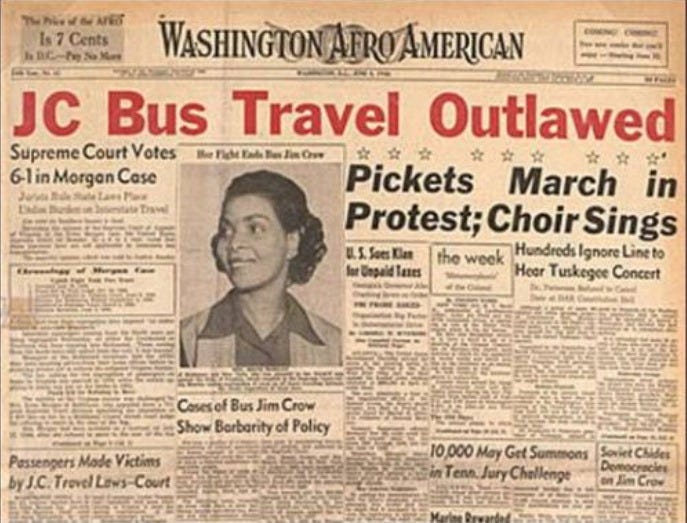
The court decision was respected in Virginia soon after it was issued as exemplified by the 1947 Journey of Reconciliation where African American bus riders travelling on Greyhound and Trailways buses through the upper South tested the law. However, states in the deep South ignored the Supreme Court ruling which led to the Freedom Rider campaign to force Southern states to follow the court’s decision.
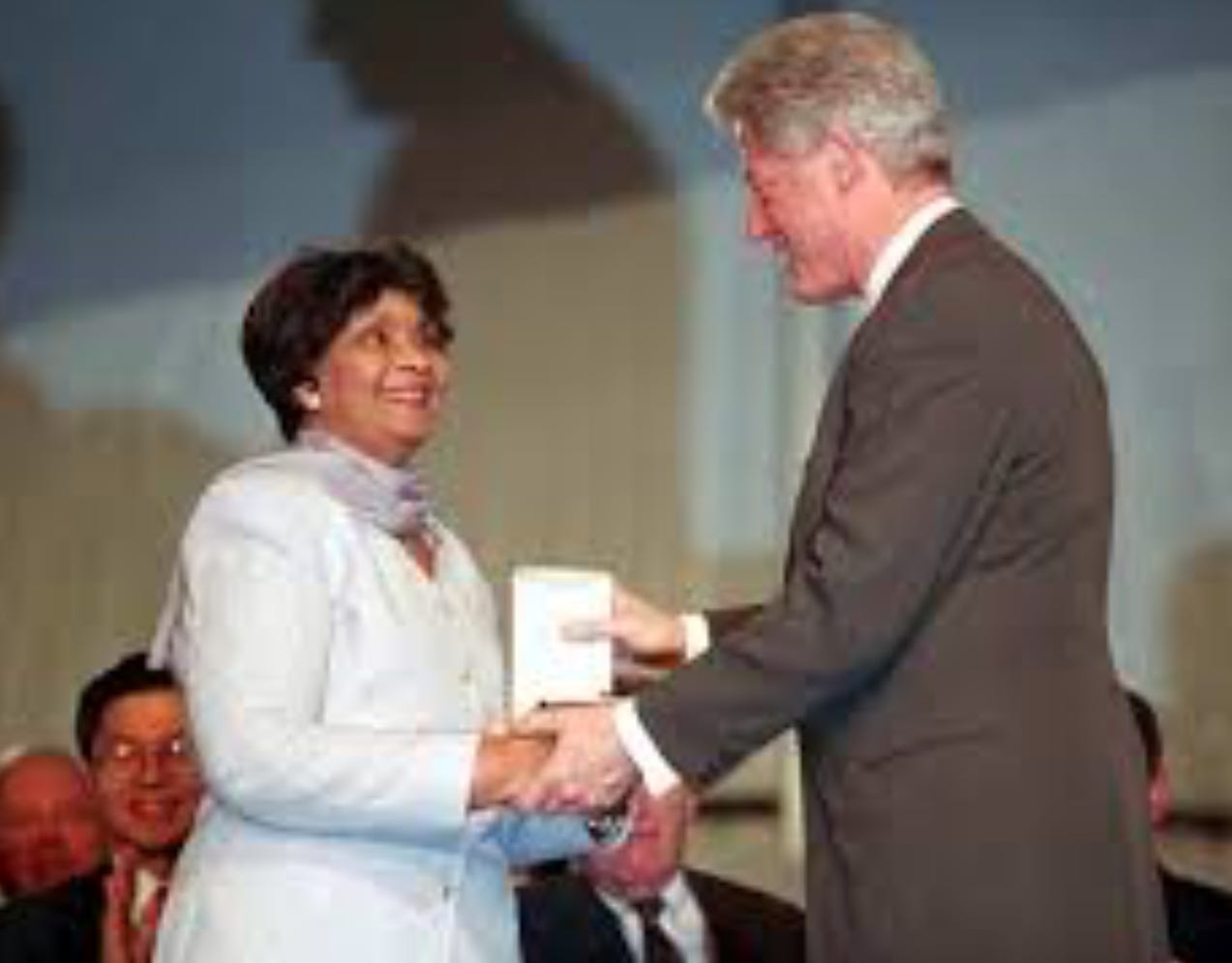
Morgan’s actions set in motion a series of events that would change the United States, including the actions of Rosa Parks eleven years later. That’s not saying that Morgan is more important than Parks. Both are remarkable stories. It just exemplifies the Encore Effect—that the prevalent stories dominate center stage at a loss to others. Sometimes, in history, there is so much content to be covered and so many great stories that once we become focused on one, others are often forgotten or overlooked.
One way to remedy this is to keep reading the History Lowdown. As always, thanks for reading.
Thank you for sharing Morgan's story which I had never heard of. Quite an appropriate finale to Black History Month.
I will keep reading as they say “ you are never too old to learn.”